Find the Perfect Newborn Photographer Near You with a Private Studio
On this page
The first weeks with your newborn are a blur of sleepless nights and fleeting, perfect moments. Capturing them with a professional in a private studio ensures those memories stay both safe and stunning. A dedicated studio beats on-location shoots: controlled lighting, hygienic props, and a calm, temperature-regulated space designed for your baby’s comfort. In this guide, you’ll learn how to time your session, prepare for the big day, and know what happens behind the scenes—no surprises. We’ll also show you how to evaluate a photographer’s portfolio and pricing, so you can choose with confidence before your little one arrives. By the end, you’ll have a clear checklist of questions to ask, plus the insider know-how to book someone who delivers heirloom-quality images—without the stress.
Understanding the Ideal Timing for Newborn Sessions
Why the First Two Weeks Matter Most
The window for truly classic newborn photography is remarkably narrow—and understanding why can transform your expectations into stunning results. Between five and fourteen days after birth, your baby is at their sleepiest and most flexible, a state professional photographers rely on to create those serene, curled-up portraits you see in studio portfolios. During this brief period, newborns still retain the natural flexed posture from the womb, so they settle into gentle, safe poses without resistance. They tolerate soft handling and swaddling with remarkable ease. Crucially, they spend the vast majority of the session in a deep sleep. That deep sleep is the golden ticket: it means your photographer can adjust tiny fingers, tuck delicate legs, and position tiny chins without startling your baby awake. After the two-week mark, newborns become noticeably more alert, startle easily, and often resist the very poses that made those dreamy images possible. The result isn’t impossible—just different—with more lifestyle-style shots and fewer intricate, posed setups. If you envision those timeless, tightly-wrapped, eyes-closed portraits, the first fortnight is non-negotiable.
Booking Early: The Second Trimester Advantage
Here’s the reality of the newborn photography world: babies do not read calendars. Birth dates shift, sometimes by days, sometimes by weeks, and professional studios plan around this unpredictability by intentionally limiting the number of newborn sessions they accept each month. This isn’t scarcity for its own sake—it’s the only way to guarantee that when your baby arrives, a dedicated session slot is genuinely available. The smartest move is to book during your second trimester, typically between weeks 14 and 27. At this stage, you’ve confirmed your pregnancy is progressing well, and you have ample time to research studios, review portfolios, and ask the right questions. When you book early, the photographer pencils in your due date, reserves a provisional session slot, and then adjusts the exact date once your baby makes their entrance. This flexibility is a gift: you won’t be scrambling at week 38, calling studios in a panic, or settling for whoever has a cancellation. Instead, you walk into your fourth trimester with one less thing to coordinate, knowing your photographer is ready, your date is held, and the only surprise left is the tiny human you’re about to meet.
What a Private Studio Offers Over Other Settings
Searching for a “newborn photographer near me with studio” isn’t just about convenience. It’s about choosing an environment built specifically for a brand-new baby and their family. A private studio differs fundamentally from a living room or a rented hall—and that difference shows in every image.
Controlled Environment for Safety and Comfort
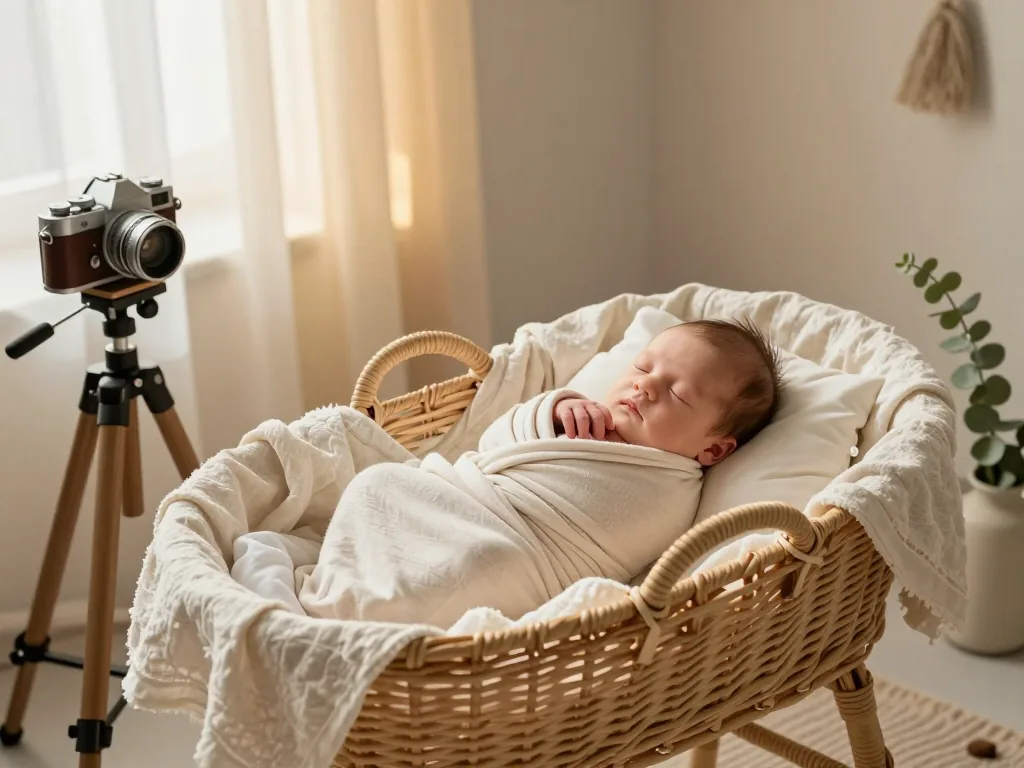
A dedicated studio offers predictability. The temperature stays consistently warm, keeping a sleeping newborn content during those curled, peaceful poses. Soft, diffused lighting replaces the harsh, shifting sunlight of a home. And crucially, the space is quiet and insulated. No barking dogs, no doorbells, no siblings racing through the background. That calm allows your baby to stay in a deep sleep—the key to those classic, serene portraits. Without the pressure of fading daylight, the photographer can take the time to soothe and safely position your little one.
Hygiene and Sanitization Protocols
Newborns have fragile immune systems, so a professional studio treats cleanliness with the utmost care. After every session, all props, wraps, backdrops, and surfaces are thoroughly sanitized with baby-safe, non-toxic cleaners. Fabrics are washed and dried at high temperatures. This rigorous routine is nearly impossible to replicate at home, where everyday germs linger. Booking a studio means paying for a level of hygiene that directly safeguards your child—and gives you peace of mind throughout the shoot.
Props, Wraps, and Backdrops at Your Disposal
An in-home photographer can only bring what fits through your door. A private studio, however, holds a treasure trove of creative options: handcrafted baskets, delicate knit wraps, stylish headbands, and backdrops in every color. These items are not just plentiful—they’re regularly rotated and professionally cleaned. You and the photographer can collaborate on looks ranging from minimalist to rustic to whimsical, without buying or sourcing a thing. That diverse wardrobe offers immense creative flexibility at no extra cost, ensuring a gallery as unique as your child.
What to Expect During a Typical Studio Session
Session Length and Pacing
A standard newborn session isn’t rushed—it’s a deliberately unhurried block of time, usually two to four hours. Why? Because your baby calls the shots. Feedings, burping, soothing, and diaper changes are woven into the flow, not treated as interruptions. A skilled photographer reads your newborn’s cues—a flutter of eyelids, a fuss, a hungry cry—and adjusts the pace. You’ll never be pushed to hurry or forced into a pose when your baby is unsettled. Instead, the photographer works around your infant’s rhythms, capturing serene, curled-up images during deep-sleep windows and pausing patiently when wakefulness takes over. That unhurried approach is what yields dreamy, timeless portraits without stress for you or your little one.
Safe Posing and Handling Techniques
Safety is the non-negotiable foundation of every professional newborn session. Reputable photographers train in newborn posing, including advanced composite techniques. In a composite pose, the photographer captures multiple images separately—the baby’s head resting on a firm surface, then hands gently placed, then feet—and merges them digitally. So your baby is never placed in a precarious, unsupported position, even if the final image suggests otherwise. During the session, you should never see your newborn balanced on a prop, hanging in a wrap, or with their head unsupported. A true professional keeps a hand on your baby nearly always, or uses a spotter just out of frame, ensuring every pose is physically secure and emotionally reassuring. If something feels off, ask questions—a good photographer will gladly explain their process and show how each setup is made safe.
The Photographer’s Role as a Baby Whisperer
A seasoned newborn photographer is part artist, part calming presence. Expect a toolkit of soothing techniques: the gentle hiss of white noise, slow rocking, warm snug swaddles that mimic the womb. They know how to transition your baby from light sleep into a deep, poseable slumber—and when to step back and let you take over. Throughout the session, the photographer guides you with clear, gentle instructions: when to feed, when to soothe, when your baby just needs a quiet cuddle before continuing. This collaborative rhythm keeps the experience low-stress and enjoyable, letting you relax rather than hover anxiously. By the end, you’ll have not only a gallery of stunning images but also a memory of a calm, unhurried morning spent cherishing your newest family member.
Preparing for Your Newborn Studio Session
A successful newborn session starts well before you arrive. With a bit of preparation, you can help your baby stay calm, cozy, and beautifully drowsy for those timeless portraits.
What to Bring and How to Dress Your Baby
Packing the right essentials makes everything go more smoothly. Bring at least two extra diapers, a full pack of wipes, and a change of clothes for yourself—accidents happen, and staying fresh matters. If you bottle-feed, pack more formula or expressed milk than you think you’ll need. If you nurse, plan to feed on demand without any rush. A pacifier, even if it’s rarely used at home, can be a lifesaver for soothing between poses.
How you dress your baby for the trip matters more than you’d expect. Choose a loose, front-fastening outfit—a zippered sleeper or wrap-style top works well—that avoids pulling anything over their head. Skip tight socks, elastic waistbands, and snug-cuffed onesies, as these can leave temporary red marks or creases on delicate skin. For most shots, the photographer will undress your baby anyway, so a soft blanket over them in the car seat is all you need.
Feeding and Scheduling Tips for the Day
Timing makes all the difference. Feed your baby fully either just before leaving home or right when you arrive at the studio. A completely full, contented baby drifts into that deep, sleepy state ideal for gentle posing and serene expressions. Keep the morning relaxed—skip errands, ignore your phone, and arrive a few minutes early so you can settle in without stress. Avoid scheduling other appointments or commitments that day. Newborn sessions often run longer than expected, and a rushed parent passes that tension straight to the baby. Give yourself the whole day as a buffer and let the session unfold at your baby’s pace.
Parent and Sibling Involvement
Many studio packages include parent or sibling portraits, and these often become the most treasured images. If you want to be in the photos, plan your outfit with the same care as your baby’s. Choose neutral, solid colors in soft tones like cream, beige, gray, or muted pastels. Steer clear of busy patterns, bold logos, and stark white, which can distract or wash out the image. The photographer will guide you into comfortable poses—cradling your baby, sharing a quiet gaze, or lying side by side. For siblings, keep outfits simple and coordinated rather than identical. The goal is natural, unposed interaction, so let the photographer direct you into gentle, authentic moments. A little patience and a relaxed attitude help everyone—especially the kids—enjoy the experience.
Evaluating Photographers, Pricing, and Packages
What to Look for in a Portfolio
Before you commit to any newborn photographer, spend real time studying their gallery—not just the first five images, but the full body of work. Consistency is the single most telling sign of professionalism. Look for a uniform approach to lighting, posing, and editing across dozens of sessions. In high-quality newborn photography, the baby’s hands should appear relaxed, often curled naturally near the face, and never strained or contorted. Skin tones should look like real skin—warm and soft, not overly saturated or waxy from excessive retouching. Poses should communicate safety and comfort: a sleeping baby nestled in a wrap, supported by a parent’s hands, or resting in a simple prop. If you spot any image where the baby’s head is at an awkward angle, fingers are white from pressure, or the pose looks physically impossible, move on. That portfolio is a red flag, not a style choice.
Understanding Pricing Structures
Newborn photography pricing varies widely depending on location, experience, and what is included. As a general market estimate, a basic newborn studio package typically ranges from $150 to $500 per session. This usually covers a two-hour session in the studio, professional editing, and a set number of digital images—often between ten and twenty—or a small selection of prints. Higher-end packages can climb significantly, sometimes reaching $800 or more per session, and typically include longer shoot times, multiple outfit changes, a parent album, or custom wall art. When comparing quotes, always ask what is actually included. A lower price may only cover the session fee, with edited images sold separately, which can double your final cost.
Questions to Ask Before Booking
Before you sign a contract, ask these questions directly:
- How many sessions do you book per month? (You want a photographer who limits volume to ensure full attention.)
- What is your backup plan if the studio is unavailable on your date?
- Do you have a release form for sharing images on social media?
- What is your refund or rescheduling policy?
- Are props and wraps washed after every use?
Also, confirm the photographer’s training in newborn safety, their sanitization routine between clients, and exactly how many fully edited images you will receive. Knowing whether the session fee covers edited images or if products are sold separately will prevent surprises at the final gallery reveal.
In-Home Lifestyle Sessions as an Alternative
In-home lifestyle sessions offer a relaxed, documentary feel, capturing real moments in your own space. However, they lack the controlled lighting, specialized props, and precise temperature management of a private studio. They are best for parents who want candid, everyday interactions rather than posed portraits. But for classic, heirloom-quality images, a studio is often the preferred choice.
A private studio is not just about pretty backdrops—it is a controlled, hygienic environment designed specifically for the safety and comfort of a newborn, which is why most professional photographers recommend it for posed sessions.
Finding the right newborn photographer with a private studio comes down to booking early, preparing well, and choosing a professional who prioritizes safety and hygiene. A dedicated studio space offers controlled lighting, comfortable temperature, and a sanitized environment—all essential for your baby’s delicate first days. Research portfolios, read client reviews, and ask about the photographer’s training in newborn posing; doing so will leave you confident in your choice. Your next step? Reach out to a few local studios, check availability around your due date, and schedule a consultation to share your vision. Trust your instincts—when you find someone who puts you at ease, you’ll be ready to capture those fleeting, precious moments.